About 3 Percent Of Accounts Supply Prediction-Market Accuracy. The Other 97 Percent Supply The Losses That Fund It.
A 2026 academic paper analyzed the entire universe of Polymarket transactions to answer one question: does the wisdom of the crowd actually drive these prices, or does something else?
You'll get how an event contract is actually priced, the volume numbers behind the 2026 boom, from under 5 billion dollars to 44.8 billion in nine months, and the regulatory fight over what counts as gambling, including New York's 36 billion dollar lawsuit and the CFTC suing nine states right back.
You'll get a historical study of how these markets scored during the 2024 election, platform by platform, and the concentration problem researchers found underneath it.
And you'll get an original simulation, 20,000 accounts deep, showing what trading with the crowd costs even when the crowd is right on average, with the exact page number next to every finding.
Introducing The Prediction Markets Report.
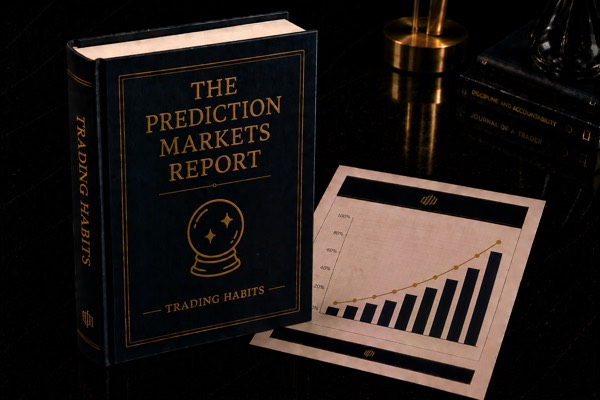
A Trading Habits Report
The Prediction Markets Report
How event contracts work, the volume numbers behind the 2026 boom, the regulatory fight over what counts as gambling, and the research on who profits when a market prices an outcome right.
- Length 20 pages, with 11 original charts and a 20,000-account simulation
- Author TradingHabits.com
- Format PDF, delivered as an instant download right after checkout
- Covers Contract mechanics, the CFTC-versus-states fight, a 2024 election case study, and an original simulation of trading costs
No event contract, platform, or trade is recommended anywhere in this report. Kalshi and Polymarket are named because they are the two dominant platforms and the subject of the data, not as an endorsement of either one.
What's Inside
20 Things This Report Actually Says
- 01What an event contract actually is, and why its price doubles as the market's implied probability.Page 4
- 02The volume numbers behind the 2026 boom, from under 5 billion dollars to 44.8 billion in nine months.Page 5
- 03How that compares to what every legal U.S. sportsbook handles in an average month, combined.Page 5
- 04What people trade on Kalshi versus Polymarket, category by category, in the platforms' own reported data.Page 6
- 05How the 2024 election briefly made politics 90 percent of one platform's total volume.Page 6
- 06The regulatory fight: state cease-and-desist letters, and the CFTC suing nine states back.Page 7
- 07The 36 billion dollar lawsuit New York's attorney general filed in the summer of 2026.Page 7
- 08Why the line between a prediction market and a sports bet changes what protections apply.Page 8
- 09What a divided federal appeals court ruled about which agency has jurisdiction here.Page 8
- 10A historical study of the 2024 election markets, and how each platform scored on accuracy.Page 9
- 11Why one platform's own team disputed that study, and what the lead researcher said back.Page 9
- 12A documented historical case of one trader holding more than a fifth of a major election market.Page 10
- 13What that concentration did to how prices moved during the final weeks of the race.Page 10
- 14A 2026 academic paper that tested the wisdom-of-crowds claim directly against the data.Page 11
- 15The 3 percent of accounts the researchers found are driving the accuracy.Page 11
- 16Why a market being right on average and a trader holding an edge are two separate claims.Page 12
- 17Why a thin order book can move against a single trade that a deep book would absorb.Page 13
- 18An original simulation of what trading with the crowd costs, built 20,000 accounts deep.Page 14
- 19The full result: only 28 percent of simulated accounts finished positive, on a perfectly calibrated market.Page 15
- 20A six-question checklist to run before any trade, on any platform, in any state.Page 18
HABITS
★
Certificate of Guarantee
60-Day, No-Questions-Asked
If The Prediction Markets Report doesn't earn its place on your desk, email us any time within 60 days of purchase for a full refund. No form to fill out. No reason required.
Backed personally by Jason Parker, founder of Trading Habits. He built this himself, covered by the same guarantee above.
Instant Download
$9One-time payment. No subscription.
Order Now20-PAGE PDF · DELIVERED IMMEDIATELY AFTER CHECKOUT · 60-DAY GUARANTEE
Behind The Report
One Historical Study Of The 2024 Election Markets
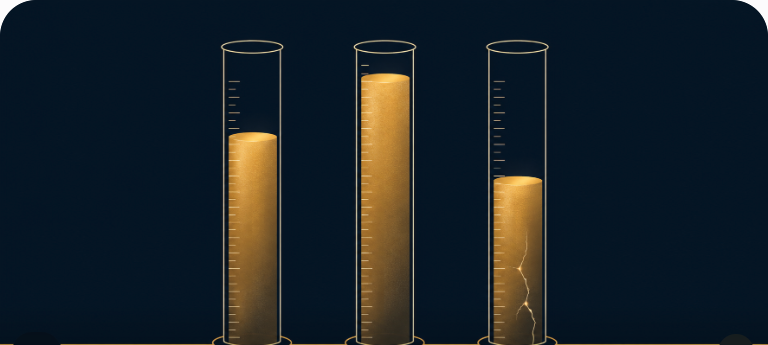
Three measuring columns, three different readings. One of them has a crack in it.
A Closed, Dated Study
Vanderbilt University researchers Joshua Clinton and TzuFeng Huang examined 2,500 prediction-market contracts carrying 2.5 billion dollars in volume across Polymarket, Kalshi, and PredictIt during the final five weeks of the 2024 U.S. presidential election. Using industry-standard calibration metrics, they scored PredictIt at 93 percent accuracy, Kalshi at 78 percent, and Polymarket, the largest exchange by volume, at 67 percent.
Nothing here describes a live market or a current position. This is a closed, historical event studied after the fact, and the report treats it that way throughout.
A Disputed Number, A Bigger Point
Kalshi's own media team pushed back, arguing calibration understates how close its markets ran to the outcome. Clinton told the outlet DL News his study's central finding was about something else: prices for the same event diverged across platforms, and one trader's account held more than a fifth of a major market at one stage.
No platform is ranked, endorsed, or recommended anywhere on this page or in the report. The full study, the concentration problem it uncovered, and what both mean for a current trader are in the report itself.
One Historical Study Of The 2024 Election Markets
A simplified rendering of the Clinton and Huang accuracy study, matching the sourced chart on page 9 of the report. Background only. The report itself covers the concentration problem, the academic research, and the simulation.
Try It: What A Spread Costs Over Many Contracts
Default matches the report's own simulation: 150 contracts at a 2-cent spread. That spread cost alone, before any fee, is what turned a well-calibrated market into a losing account for most simulated participants on page 15.
Background only. Nothing on this page or in this report is a recommendation to use, avoid, sign up for, or fund an account on any specific prediction-market platform.
Common Questions
How accurate were prediction markets in the 2024 election, according to this study?
Vanderbilt researchers Joshua Clinton and TzuFeng Huang scored PredictIt at 93 percent accuracy, Kalshi at 78 percent, and Polymarket, the largest exchange by volume, at 67 percent, using industry-standard calibration metrics across the final five weeks of the race.
Did the exchanges agree with that finding?
Not entirely. Kalshi's own media team pushed back, arguing calibration understates how close its markets ran to the outcome. Clinton told the outlet DL News his study's central finding was about something else: prices for the same event diverged across platforms.
What was the "concentration problem" the study found?
One trader's account held more than a fifth of a major market at one stage, according to Clinton. That's a separate issue from calibration accuracy, and the report covers what it means for a current trader.
Is this report about a live or current market?
No. It's a closed, historical study of the 2024 election window, and the report treats it that way throughout. No platform is ranked, endorsed, or recommended anywhere on the page or in the report.